How to Choose an eSIM for Laos: Local Network vs Regional Roaming (2026)
Published
If you're planning a trip to Laos, you've probably seen the ads: Airalo, Holafly, and a dozen other "travel eSIM" brands promising cheap data in over 100 countries. They look convenient. But there's a catch you need to know about before you buy.
How Regional Roaming eSIMs Actually Work
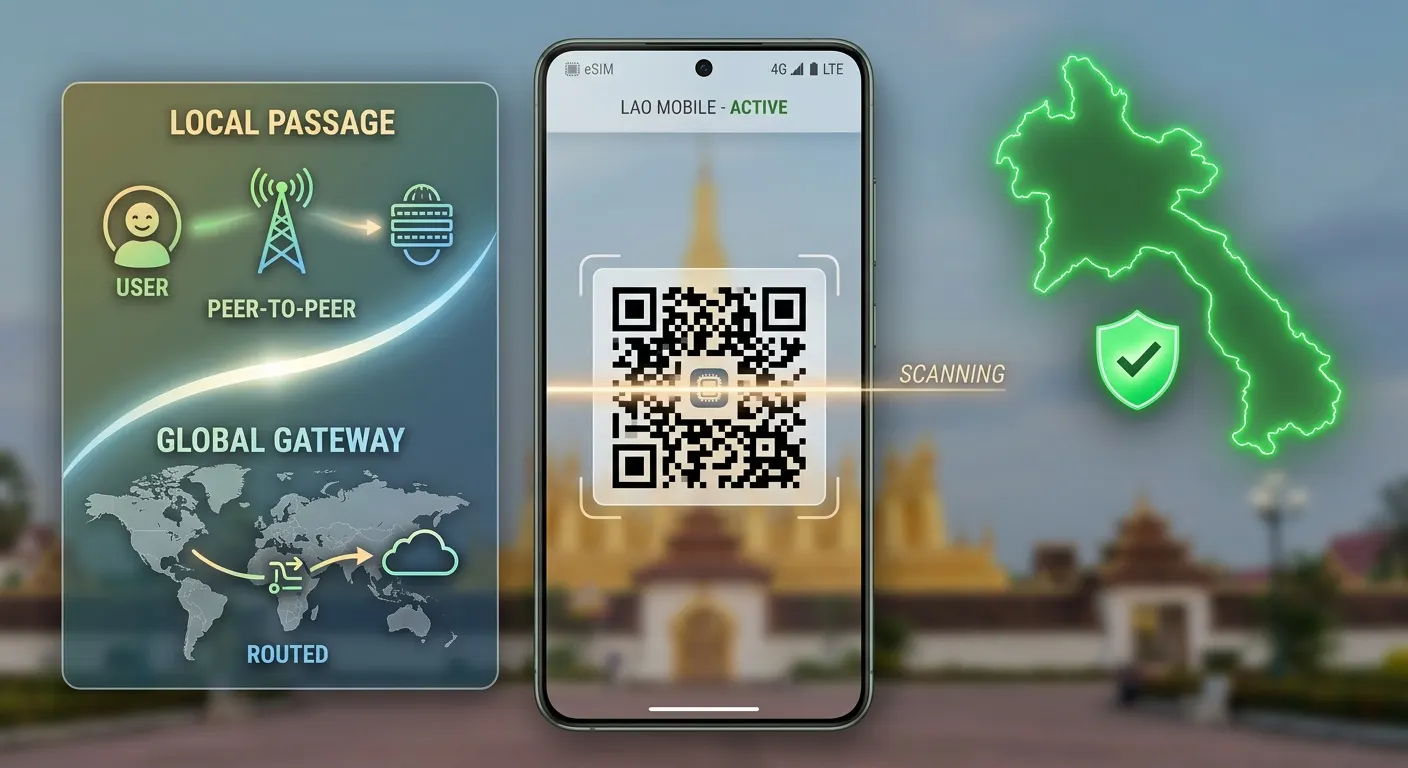
When you buy a regional eSIM from Airalo, Holafly, or similar resellers, you are not getting a direct connection to a local network. You're buying a roaming agreement — your phone connects to a local tower, but your traffic is tunnelled back to the provider's home network, often on the other side of the world.
This matters more than you might think.
The Hidden Risk: Your Data Routed Through Unknown Networks
In 2025, researchers from Northeastern University published a study that tested dozens of popular travel eSIM services. The findings were alarming:
- Traffic rerouted through Chinese infrastructure — many travel eSIMs route user traffic through Chinese-owned servers, regardless of where the user is physically located. You don't need to be in China for this to happen.
- No network disclosure — providers don't tell you which carrier your data passes through. Your "European" eSIM might break out in Hong Kong.
- IMSI capture — resellers gain access to your International Mobile Subscriber Identity (IMSI) number, and in one case, could locate users within 800 metres.
- Website access changes — because your IP appears to be from a different country, you may find websites blocked or redirected as if you were in that country.
As the study noted, "eSIM resellers gain extensive access to user data, including IMSI numbers, and in one case, device location information accurate to within 800 metres, along with the ability to send SMS messages directly to users."
The full discussion is on PrivacyGuides.
Why Local Breakout Matters — Especially in Laos
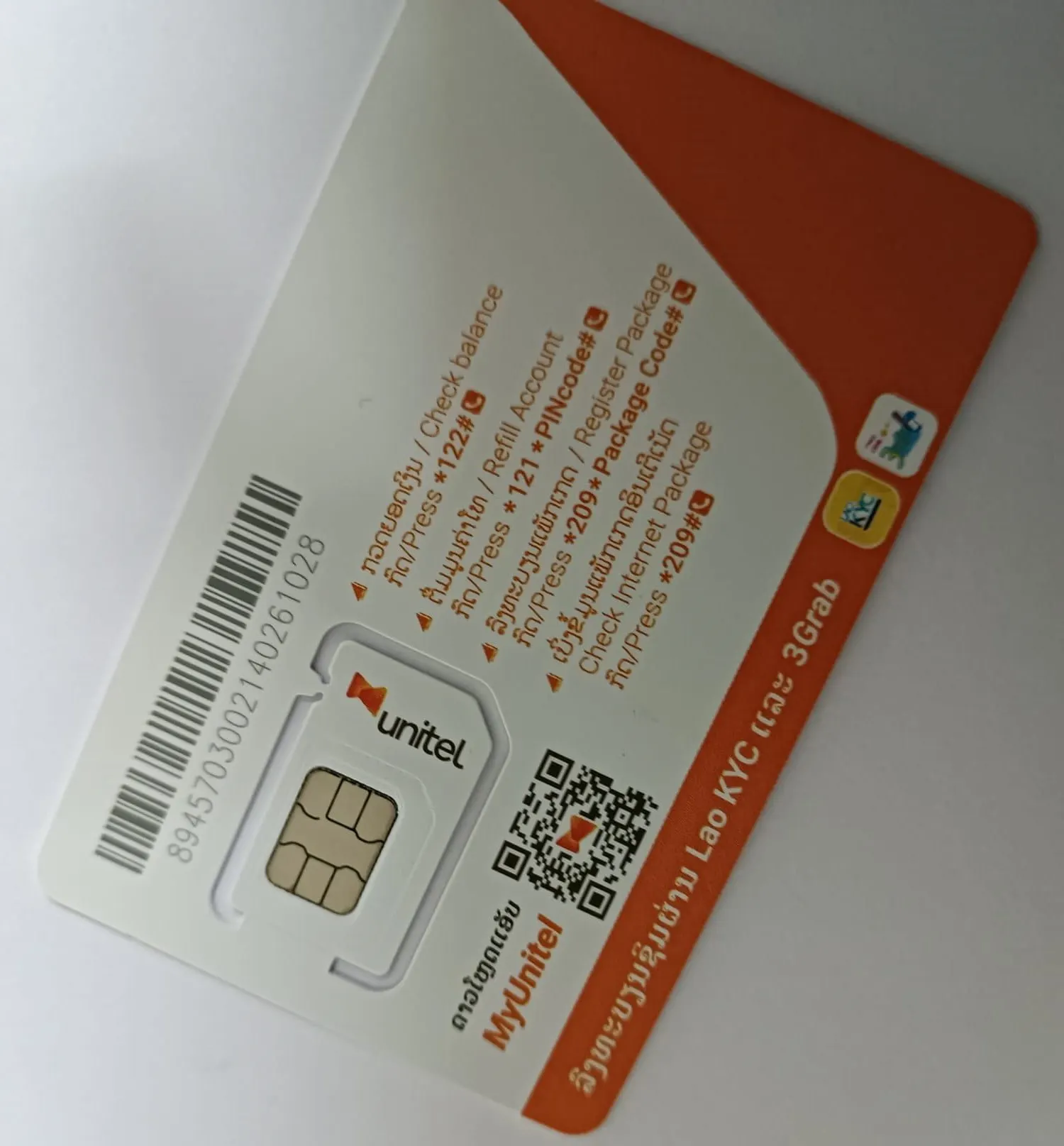
A local eSIM (one that connects directly to a Laos carrier like Unitel) gives you a local IP address inside Laos. This is not just a privacy advantage — it's a practical necessity:
- Local apps may behave differently on a roaming IP. Apps like LocA Pay (for QR payments) or the LCR app (for train tickets) sometimes rely on a Laos IP address, so a roaming eSIM can occasionally cause access or payment issues — though not always.
- Faster, more reliable connections. Your data doesn't need to leave Laos and come back. Lower latency, fewer dropouts.
- Better pricing. Regional roaming eSIMs add markups for their "global" convenience. A direct Laos eSIM cuts out the middleman.
- No roaming activation needed. Local eSIMs work as a native data profile — no toggle needed, no "data roaming" switch required on your phone.
Quick Comparison: Local Laos eSIM vs Regional Roaming
| Feature | Local Laos eSIM (shop.internetlaos.com) | Regional Roaming (Airalo, Holafly) |
|---|---|---|
| Network connection | Direct to Unitel (Laos) | Roaming — breaks out in unknown country |
| Privacy | Traffic stays in Laos | May route through Chinese/undisclosed networks |
| Local apps (LocA Pay, LCR, Lao QR) | ✅ Works | ❌ Often blocked |
| Data roaming toggle | Not needed | Must be enabled |
| Latency | Low (local) | Higher (tunnelled overseas) |
| Supports local phone number | Yes | No (data only typically) |
| Works with Lao banking / SMS | Yes | No |
| Price | Competitive | Markup for "convenience" |
How to Choose the Right eSIM for Laos
Here's a simple decision framework:
- Do you plan to use local apps? (QR payments, train booking, food delivery, banking) → Choose a local Laos eSIM.
- Is privacy important to you? → Choose a local Laos eSIM. Your traffic stays under Lao jurisdiction, not routed through China or other third parties.
- Do you need a local Lao phone number? → Choose a local Laos eSIM (regional roaming SIMs are data-only).
- Do you travel to multiple countries on the same trip? → Consider a local eSIM per country, or a trusted regional provider that discloses its network partners — but be aware of the tradeoffs above.
- Is budget your only concern? → Compare total cost including any hidden fees. Local eSIMs often work out cheaper for data-heavy use.
Our Recommendation
For the best combination of privacy, reliability, and access to local services, we recommend ordering a local Laos eSIM from shop.internetlaos.com before your trip.
Our eSIM connects directly to Unitel — Laos' largest mobile network — so your data stays in Laos, local apps work, and you're not paying a middleman. Delivered by QR code in minutes, no roaming toggle needed.
Frequently Asked Questions
Do I need to enable data roaming on my phone to use a local Laos eSIM?
No. A local eSIM profile works as your phone's native data connection. Data roaming only applies to your primary SIM — the eSIM works independently.
Can I keep my home SIM active while using a Laos eSIM?
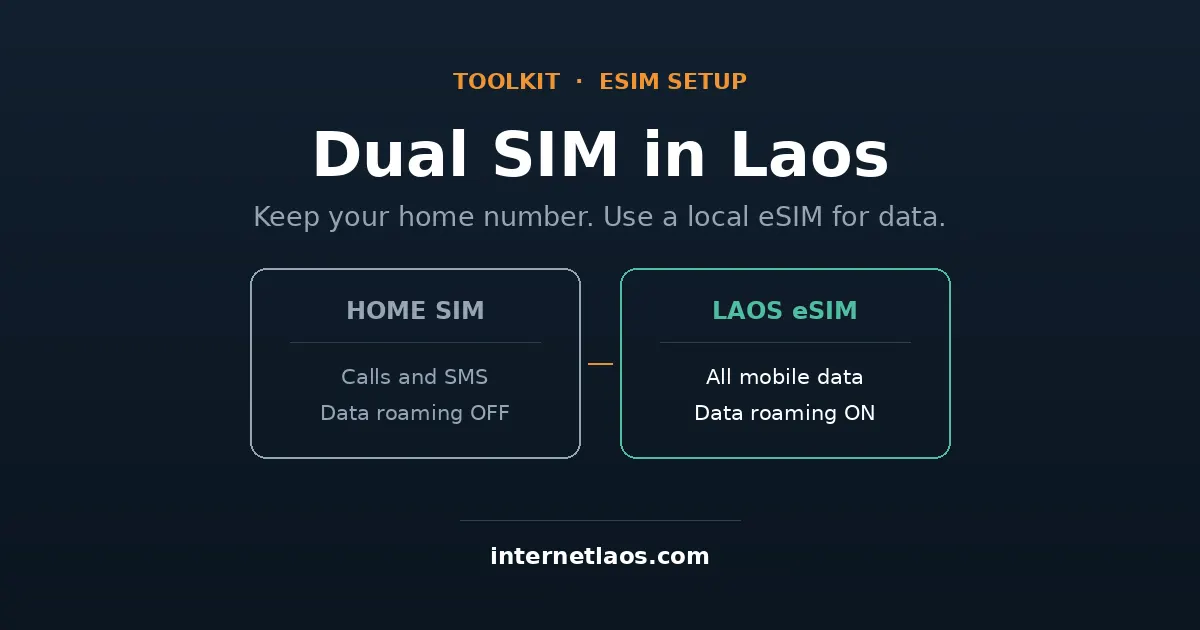
Yes. Use your home SIM for calls/SMS and the eSIM for data. Set the eSIM as your default data line in your phone settings.
Is Airalo safe to use in Laos?
Based on the USENIX Security study, travel eSIMs like Airalo and Holafly have been found to route user traffic through undisclosed networks, including Chinese infrastructure. For privacy-conscious travelers, a local eSIM is the safer choice.
Will a roaming eSIM work for Lao QR payments?
Often not. Apps like LocA Pay and Lao banking apps route through local payment gateways that require a Laos IP address. A local eSIM provides this.
How do I install a Laos eSIM?
Order online, receive a QR code by email, scan it with your phone's camera, and you're connected. Full instructions are provided at checkout.
Planning your Laos trip? Get your local Laos eSIM before you fly — QR delivery, Unitel network, no roaming fees.
Need mobile data sorted for your Laos trip? Our Laos eSIM runs on the local Unitel network, from $6.90.